
Dark and Darker is built around a simple idea that stays brutal in practice: enter a dungeon, collect loot, then leave alive. If you extract, you keep what you found. If you die, you lose what you carried. Progress comes from repeating clean runs, not from winning every fight.
This guide explains the core loop, the main game systems, and the habits that help new players stop bleeding gear and start extracting consistently.
The core loop in one run
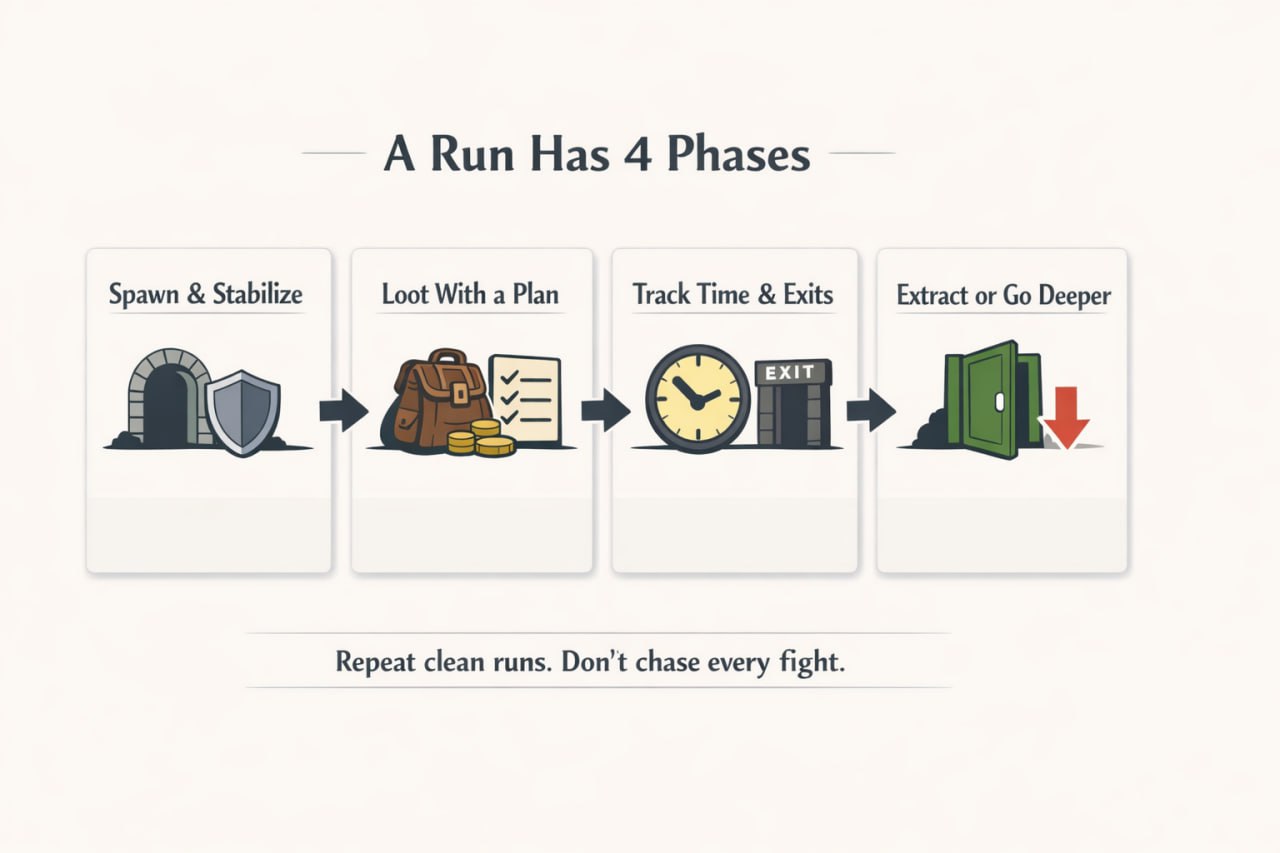
A typical run has four phases.
1) Spawn and stabilize
You spawn on a fixed map layout. Enemy types, traps, exits, and key rooms stay in the same places across runs. Loot spawns vary, but the overall structure is learnable.
Your first job is to get your bearings:
- Listen for footsteps and combat nearby
- Clear the closest threats without making unnecessary noise
- Identify at least one safe retreat route
2) Loot with a plan
Loot is everywhere, but your inventory space, healing resources, and time are limited. New players often die because they loot like the run is infinite.
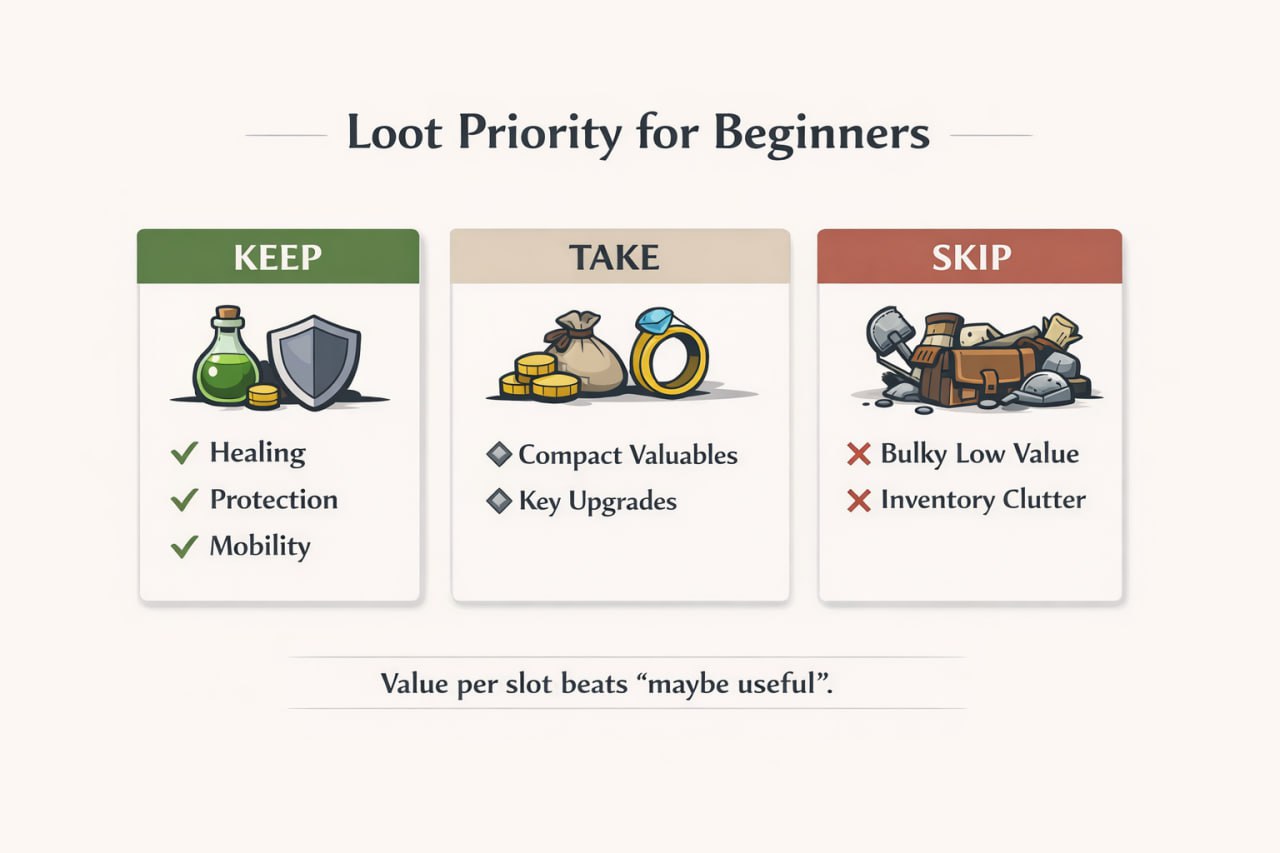
A better approach:
- Prioritize upgrades that improve survival now (heals, protection, mobility)
- Take valuables that are easy to carry
- Skip low-value clutter that slows you down
3) Track time and exits
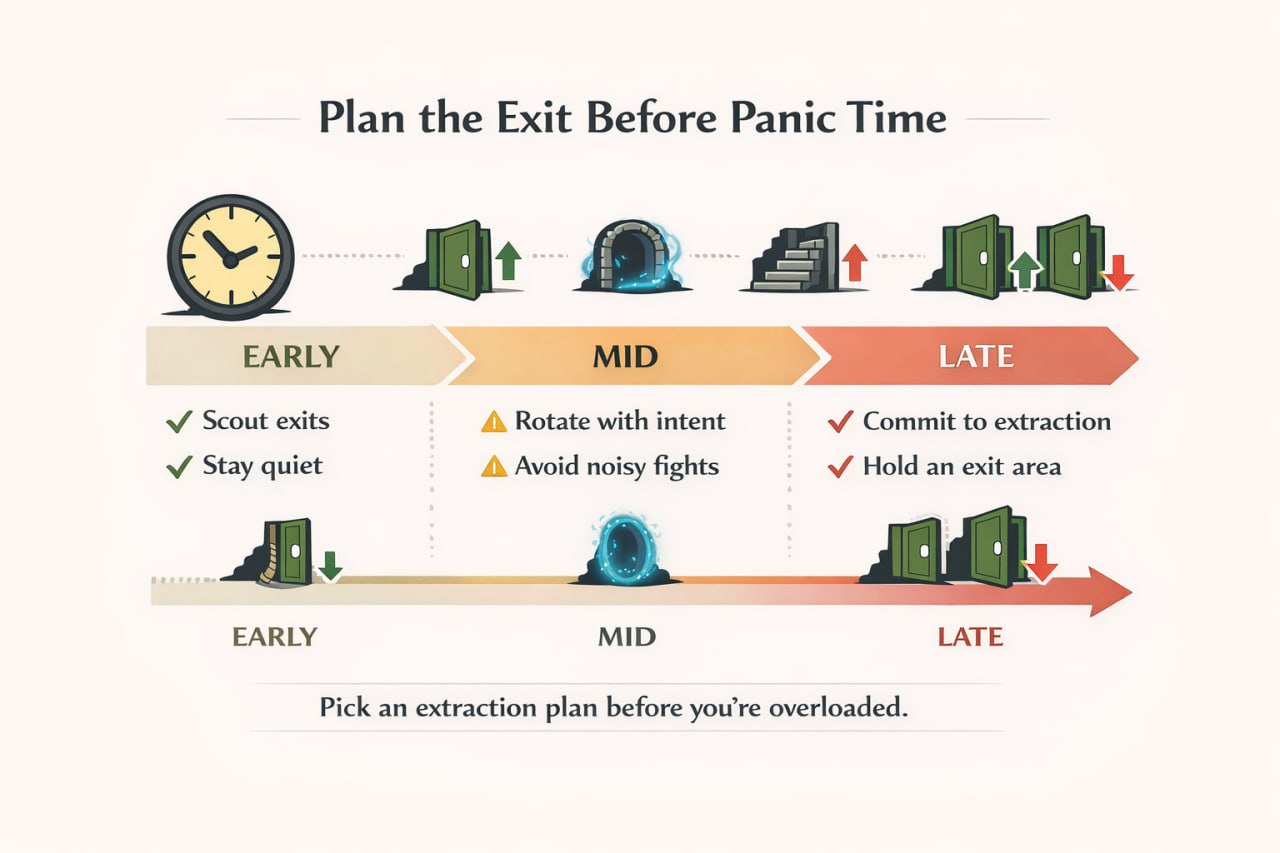
There is a match timer. When time runs out, anyone still inside is eliminated. Exits are not all available from the start. Many activate later, sometimes early, sometimes near the end, depending on the exit type and match flow.
4) Extract or go deeper
You can usually leave in two ways:
- Extract to safety
- Take a red-marked route down to a deeper level (higher risk, higher reward)
As a beginner, treat extraction as the win condition. Fighting is optional. Leaving alive is not.
Modes and account access basics
Dark and Darker typically has a standard mode for learning and a higher-stakes mode aimed at experienced players. Some features may be tied to a paid upgrade, such as extra character slots and trading features.
If you are new, stick to the mode that lets you learn map flow, PvE patterns, and extraction timing without stacking extra risk.
Dungeons, levels, and what stays consistent
Key points that make learning easier than it looks:
- Map layouts are stable
- Traps and monster placements are consistent
- Exit locations are consistent, but activation timing varies
- Loot is random, but spawn points are known
So you are not guessing forever. You are building a mental map.
Exits and extraction, how it really works
Exits can take different forms:
- Portals that become active later
- Stairs or passages that collapse after use
- Ropes or similar one-time escapes
- Multi-use exits like certain lifts or rafts on specific maps
General rules to remember:
- Many exits are one-time. If someone uses it, it may disappear or lock
- Some exits are multi-use and cycle multiple times
- Group extraction is easier when you control an exit area and limit angles of attack
- Downward routes to the next level are usually multi-use, letting multiple players descend
New-player habit that matters most:
Pick an extraction plan before you are overloaded with loot. If you wait until panic time, you extract late, loud, and desperate.
Group play and resurrection
In team runs, death is not always final if your teammates can recover your soul and use a resurrection point. This makes positioning and communication more important than raw aim.
Practical notes:
- Dying in a bad spot often means your team dies trying to recover you
- If you are the last alive, extraction can be smarter than a risky rescue attempt
- Treat every fight as a decision that affects the whole squad, not just you
Altars and short buffs
You can find interactable altars that grant temporary bonuses and then recharge after a cooldown. These are useful for:
- Stabilizing after a fight
- Preparing for a risky push
- Recovering health without spending consumables
Common altar types are usually focused on defense, speed, health recovery, and strength.
Beginner tip:
Do not build your entire plan around altars spawning in the perfect place. Use them as an advantage when you find them, not as a requirement.
Voice chat and social PvP
Proximity voice chat can be used to negotiate, distract, or de-escalate. It is not a magic solution, but it can save runs when both sides are cautious.
If you try it:
- Keep messages short
- Offer a clear intent (“passing through”, “taking a different door”)
- Do not stand still while talking
Character progression, what leveling actually changes
Leveling unlocks more build options through passive perks and active abilities. Most of your raw power does not come from levels alone. It comes from:
- Gear stats
- Perks that change how you fight
- Skill in spacing, timing, and decision-making
A useful beginner mindset:
Do not grind levels expecting your character to become unkillable. Focus on extracting and building your stash. Better gear and cleaner decisions move you forward faster than chasing fights.
Core stats and loadout thinking
Your core attributes influence damage, speed, casting, survivability, and skill checks depending on class. You typically improve attributes through items and certain perks rather than automatic level scaling.
For beginners:
- Avoid over-optimizing early
- Choose items that solve problems you keep dying to (lack of healing, poor protection, slow movement)
- Keep a simple, repeatable loadout so you spend less time in menus
Melee combat fundamentals that keep you alive
Melee is not about spamming attacks. It is about spacing.
Hit zones and damage
Damage depends on where you hit:
- Head hits are the most punishing
- Body is standard
- Limbs are weaker
Friendly fire
In many situations, hitting teammates deals real damage. In close quarters, uncontrolled swings can lose fights even when your team had the advantage.
The simplest winning pattern
- Bait an enemy swing
- Step out of range
- Step back in for one clean hit
- Reset spacing
Blocking, especially with shields, is directional. It is not enough to hold block. You often need to angle your guard into the incoming strike.
Ranged combat basics, spacing and timing
If you use bows or other ranged options:
- Shoot when you have space, not when you feel pressured
- Move between shots
- Do not tunnel vision on finishing a target if it exposes you to a third party
Ranged wins many fights simply by forcing the enemy to move predictably.
Magic and spell management for new casters
Many caster setups rely on spell memory and limited charges rather than a typical mana bar. That means you need to plan:
- Which spells you bring
- How many charges you have
- How you recover them through resting or a campfire-type consumable
Beginner caster priorities:
- Bring at least one escape or control tool
- Do not waste charges on PvE you can avoid
- Learn when to sit and recover without getting ambushed
A simple 5-run training plan
If you feel stuck in a loop of dying and re-queuing, run this mini plan.
Run 1: Quiet extraction run
Goal: leave alive with minimal fighting. Learn sound, doors, and routes.
Run 2: PvE discipline
Goal: fight only what blocks your path. Learn spacing and timing.
Run 3: Loot discipline
Goal: keep inventory clean. Drop low-value items early.
Run 4: One deliberate PvP decision
Goal: choose one fight on your terms, or avoid PvP entirely and extract. No random brawls.
Run 5: Repeat your best route
Goal: same class, similar path, similar extraction timing. Build consistency.
Common beginner mistakes that cause most deaths
Staying too long after you are already “up”
If you have valuable loot and enough healing to leave, leaving is often the best play.
Looting during danger
If you hear steps, stop looting. Create space first. Loot later.
Fighting in rooms with too many angles
Even a won fight can turn into a loss when another team hears it and collapses.
Carrying too many “maybe useful” items
If it does not keep you alive or sell for a meaningful amount, it is often dead weight.
FAQ
Final note
Dark and Darker rewards players who treat every run like a sequence of small, controlled choices. Your goal is not to “win the dungeon”, it’s to survive the first minute, build a safe route, and leave with value. Start by stabilizing: clear the closest threat, reset your health and resources, and make sure you can retreat without panicking. Then loot with a plan. Prioritize what actually helps you extract (healing, utility, high value items per slot) and skip anything that turns you into a slow target.
While you move, keep tracking exits as a live objective, not an afterthought. Note where you are on the map, listen for nearby fights, and adjust your route if the area gets noisy. When you find an extraction option, play around it: reduce risk, avoid unnecessary brawls, and take the clean leave when the run is already profitable. Once consistent extraction becomes normal, you gain control over PvP too. You can pick fights for a reason (position, advantage, timing) instead of taking random swings that wipe your progress.
If you want a quick overview of CoinLooting options for the game, start here: Dark and Darker gold.
If you already know what you need, go straight to: buy Dark and Darker gold
Either way, the fundamentals don’t change. Stabilize early, keep one exit in mind, and don’t turn a profitable run into a coin-flip fight. If your last sessions ended in messy brawls, do two or three low-risk extractions in a row, rebuild your gold and meds, then start taking fights on your terms.