
How to Get Started in Old School RuneScape
Old School RuneScape gives new players a lot of freedom from the first minutes. That freedom becomes one of the best parts of the game later on, but early it often leads to wasted time, scattered training, and a messy start. A better approach is to learn the interface, secure your account, get your first combat levels, take the Stronghold reward, and then move into Draynor, Port Sarim, Falador, and Varrock with a bit of direction.
This text follows the same core path and keeps the early game clear. If you want more OSRS content after this one, see the RuneScape hub.
Before You Begin
One of the best habits you can build early is using the Old School RuneScape Wiki whenever something is unclear. OSRS throws a lot of systems, towns, items, and quest steps at new players, and the wiki fills in missing details fast. It is worth bookmarking from day one.
OSRS is a sandbox. You are not locked into one path. You can fish and cook your own food, train combat and work toward better gear, push through quests for unlocks, or simply learn the map and town layouts. This guide gives you a strong opening, but it is still only one way to begin.
When you do quests, try not to skip everything in a rush. Many early quests are simple, but they still have good rewards and some memorable writing. If you prefer visual help, quest videos can make awkward steps easier to follow.
It is also smart not to accept big handouts from veteran players too early. Free coins and items may feel great for a minute, but a lot of early OSRS fun comes from building your own account. If someone promises something strange, especially in risky areas or odd worlds, walk away.
Account Safety and Scams
Set up your Bank PIN and Authenticator before you do anything serious. It takes a minute and protects your account before you build up GP, quest items, and gear. For official account settings, game access, and downloads, use Old School RuneScape.
You should also know the classic scam lines early. If someone says they will double your money, trim your armour, or wants you to hand over valuables for some vague promise, it is a scam. Spam bots and real-world trading ads are another common early sight. Ignore them, report them, and never hand over account details.
Client, Wiki, and Early Settings
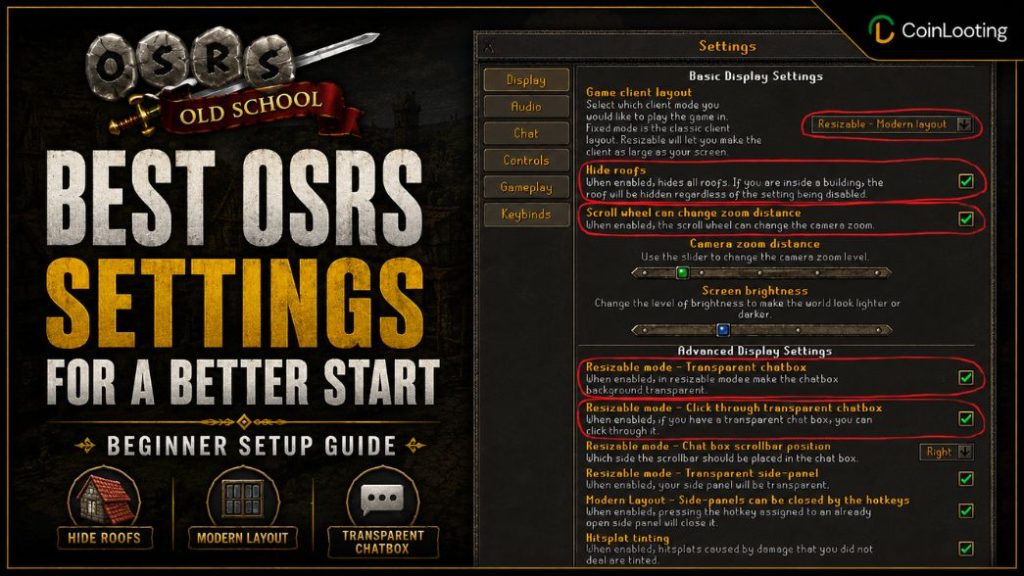
Fix a few settings right away:
- Hide Roofs
- a layout that feels comfortable
- regular use of the world map
The game feels much better once you stop fighting the interface.
If you try another client later, take a look at RuneLite and see whether it suits you. The main thing early on is simple: learn the map button, the world map icons, the combat tab, and the wiki tools as soon as possible.
It also helps to understand the bank from the start. Your inventory is small, while the bank begins with 400 slots, and all banks share the same storage. The Lumbridge bank is more than a storage box. It is your first real base.
Early Route Through Lumbridge
The first part of the game should feel simple. You leave Tutorial Island, get comfortable in Lumbridge, sort out your bank, and pick up one or two easy quests instead of running across the map for no reason.
A strong first stop is Cook’s Assistant. It is short, easy to follow, and gives early value without dragging you far from the starter area. If you have not done it yet, keep your bucket and pot in your inventory when you speak with the Banking Tutor upstairs in Lumbridge Castle.
The point here is not speed. The point is to get comfortable with Lumbridge, your inventory, the bank, and your combat tab.
Menus and Combat Skills
New players often ignore the combat interface, then wonder why training feels awkward. In OSRS, your chosen attack style matters from the start. The blue-and-white Combat Tutors near spawn can teach the basics, but it still helps to know what each style actually does.
With melee weapons, different styles train:
- Attack
- Strength
- Defence
- sometimes Controlled, which splits XP across multiple skills
Ranged gives you:
- Accurate
- Rapid
- Longrange
One easy mistake is mixing gear without thinking about it. Heavy melee armour can hurt your Ranged and Magic performance, so do not throw on random pieces and assume everything works the same.
In the first hours, basic melee is the easiest path for most free-to-play accounts. Get some early levels around Lumbridge before moving on. Around 10 in your early melee stats is enough to make the next stage feel much smoother.
Best First Training and Food
Chickens near Lumbridge are one of the easiest early training spots. They are safe, they drop feathers, and they help you settle into the rhythm of combat. After that, cows are a natural next step if you want slightly better combat practice and a few items worth banking, especially cowhide.
Before heading anywhere dangerous, get better food. Fishing south of Lumbridge is an easy early answer, and this is where Adventurer Jon helps. His paths give brand-new players some structure. If you follow his combat and gathering tasks, your opening becomes smoother and you avoid some of the weak starter gear problems.
If Adventurer Jon is not available for any reason, Al Kharid is a decent fallback for early basic melee upgrades.
This is why Lumbridge works so well as a starter area. It gives you combat, cooking, fishing, banking, tutors, and a few easy quests close together.
The Stronghold of Security
Once you have basic combat levels, food, and your account security set, the Stronghold of Security becomes your first major milestone.
This is worth doing early because the reward changes your start in a real way. Clearing the Stronghold gives you 10,000 GP, boots, emotes, and your first solid lesson in moving through dangerous rooms without wasting supplies.
Before you go in:
- bank anything you do not need
- wear your best early gear
- take enough food for the deeper floors
- keep 2 inventory spaces free
- turn auto-retaliate off
The reason for turning off auto-retaliate is simple. Your job is to move, not stop and fight everything on the way.
A nice shortcut here is Count Check in the Lumbridge Graveyard. If you ask about account safety after setting your Bank PIN and Authenticator, he can teleport you to the Stronghold entrance once for free.
When you enter, search the nearby skeleton and take the book. Then work your way through the four floors:
- War
- Famine
- Pestilence
- Death
The safest approach is simple. Keep your health high, move between safe spots, answer the security doors correctly, and do not waste run energy. On the deeper floors it helps to keep some run energy ready before crossing dangerous rooms.
When you finish, take your reward, then use Home Teleport back to Lumbridge if you want a quick reset. If you turned auto-retaliate off earlier, switch it back on once you are done. For floor details and door questions, the Stronghold of Security entry on the OSRS Wiki is a good external reference.
Questing and Exploration After the Stronghold
After taking the Stronghold reward, the game opens up in a much better way. You are no longer a brand-new account with empty pockets, and that makes the next towns far more rewarding.
Before leaving Lumbridge for the next leg, buy a spade from the general store and start the first steps of X Marks the Spot. It introduces Treasure Trails early and fits neatly into the path ahead.
Draynor Village
Draynor Village is a smart next stop. It is close, practical, and full of early value. One of the best pickups here is the Chronicle, since it gives you a cheap way to get closer to Varrock.
Draynor is also a natural place to work through early quests like:
- X Marks the Spot
- Vampyre Slayer
- Ernest the Chicken
Port Sarim and Falador
From Draynor, it makes sense to move toward Port Sarim and then Falador instead of wandering off at random.
Port Sarim helps you line up early quest progress such as Pirate’s Treasure and Witch’s Potion. It also teaches you to think in connected travel loops instead of one isolated task at a time.
From there, Falador becomes a strong next city. It opens more quest progress and makes the map feel wider without becoming messy. The Knight’s Sword is one of the best early quests to keep in mind because the Smithing reward is very strong for a low-level account.
It is also worth stopping by the Old School Museum under the Party Room in Falador. It is a small detour, but it adds one more layer of early direction.
Varrock and the Grand Exchange
By the time you reach Varrock, OSRS starts feeling less like a starter area and more like a real account build.
The Grand Exchange is the main marketplace for most tradable items, but brand-new accounts still deal with a new account trade restriction at first. That is fine. At this stage the focus is buying quest items, learning the area, and opening more progress, not making huge sales.
The walk north from Falador through Barbarian Village to the GE fits naturally into this stage. Once you are there, it is worth talking to James outside the GE about Bonds.
What to Pick Up in Varrock
Varrock is a good place to buy or line up items for:
- Imp Catcher beads
- Doric’s Quest items
- blue and orange dye for Goblin Diplomacy
It is also a strong city for:
- Romeo and Juliet
- the librarian step for The Knight’s Sword
- most of Demon Slayer
- opening the chest for Pirate’s Treasure in the Blue Moon Inn
- speaking with Dr Harlow for Vampyre Slayer
The Chronicle matters a lot here because it gives you several easy returns close to Varrock before you need more teleport cards.
If you later need more GP for gear, skilling, Bonds, or Grand Exchange purchases, see OSRS Gold.
Early Profit Near Varrock
Varrock is also where early money-making starts feeling more practical. Mining nearby ore, banking materials, and stacking quest rewards all make more sense here than random grinding back in Lumbridge.
By this point you have enough map knowledge to start choosing your own short-term GP path.
Early Progress Table
| Step | Focus | Main Result |
|---|---|---|
| Lumbridge | Bank, settings, first quest | Clean start |
| Early training | Chickens, cows, food, Adventurer Jon | Safer combat |
| Stronghold | Four floors and rewards | 10,000 GP, boots, emotes |
| Draynor | Chronicle and starter quests | Better movement |
| Port Sarim and Falador | Quest progress and city access | Useful unlocks |
| Varrock | Grand Exchange and quest flow | Stable early hub |
FAQ
Where to Look Next
Once you finish this opening path, one of the best next steps is watching a few long-form OSRS series from experienced players. They help you see how different account goals, self-set rules, and progression styles work in practice. That makes it easier to understand how open the game becomes after the early F2P start.
Your First Real OSRS Foundation
A strong OSRS start is built on basic control, safe early combat, account security, and one major cash reward at the right time. Learn Lumbridge first, use the bank and tutors properly, do not skip the Stronghold, then move through Draynor, Port Sarim, Falador, and Varrock with some money and a much better feel for the game.
That path keeps the early game clear without turning it into checklist spam.