
Throne and Liberty is a free-to-play MMORPG set in Solisium. It combines open-world exploration, guild play, PvE progression, large PvP battles, and Auction House trading. The official Throne and Liberty FAQ confirms the platform setup, cross-play rules, Lucent use, region logic, and account separation across platforms.
Progress in the game is long-term and layered. Story chapters, Codex progress, weapon mastery, gear traits, and dungeons all shape that cycle. Guild content, PvP seasons, market activity, Amitoi, Morphs, fishing, and seasonal rewards shape it too.
That is why Throne and Liberty creates steady pressure around gear, builds, roles, and team coordination.
How Throne and Liberty Works
Throne and Liberty mixes exploration, action combat, guild systems, and shared server activity. Players move through Adventure Codex chapters, Exploration Codex tasks, daily objectives, co-op dungeons, open events, boss fights, and PvP modes. Their progress depends on gear, traits, materials, currencies, build choices, and the time they can spend on repeated content.
The game uses a flexible character system. Weapon choice shapes combat direction. A build can focus on damage, healing, control, defense, mobility, or group value. Because of that, gear planning matters more than simple level gain. A character needs the right setup for dungeons, PvP, guild events, and seasonal goals.
Server choice matters as much as build choice. Friends need the same World to play together. Cross-play connects PC, Xbox Series X|S, and PlayStation 5, but PS5-only servers do not share the same cross-play pool. Cross-progression is not supported, so Steam, Xbox, and PlayStation accounts stay separate.
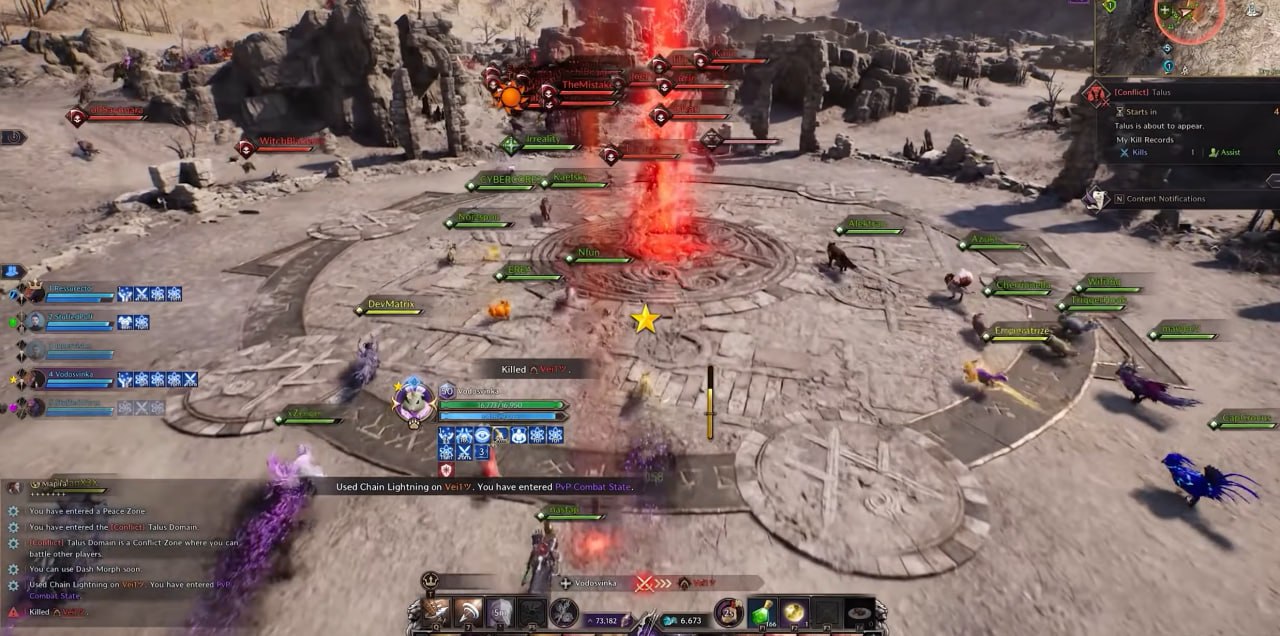
Large PvP content also depends on timing, guild coordination, build readiness, and server activity.
Game Modes and Player Goals
Throne and Liberty gives players several long-term goals at once. Some players focus on character power. Others care more about guild rank, PvP rewards, Auction House trading, cosmetics, Codex progress, dungeon readiness, fishing, Amitoi activity, Morph collection, or seasonal rankings.
Common player goals include:
- Building a stronger character through gear, traits, runes, skills, stats, and weapon mastery.
- Preparing for group content through dungeons, Dimensional Trials, guild raids, Field Bosses, and Archbosses.
- Competing in PvP through Arena, Battlegrounds, conflict events, castle pressure, and guild objectives.
- Using the market to move between dropped items, crafted items, traits, materials, cosmetics, and
- .Keeping alts and returning characters active when new systems change stat paths, rewards, and content access.
The game rewards preparation. A player who ignores gear costs, server timing, guild activity, and market demand can fall behind even with active play. Lucent, farming time, dungeon access, PvP readiness, and Auction House decisions all sit inside the same progression loop.

Progression Paths in Throne and Liberty
Progression does not end with leveling. Adventure Codex progress, Exploration Codex completion, weapon mastery, gear enhancement, traits, and runes all add pressure. Seasonal PvP rank, guild goals, and collectible systems add more.
Early characters usually follow the story path and unlock core systems. Later progress shifts toward gear refinement, dungeons, bosses, PvP readiness, and market decisions. Returning players often need to review their Codex, gear setup, server activity, and seasonal rewards before they choose the next goal.
The Stellar Journey system added another growth path tied to player actions. Starry Memory gives permanent stat progress through Adventure Codex, Exploration Codex, Traces of Spacetime, Rift Rebellions, and Relic Fishing Locations. As a result, active players have more reasons to revisit older regions, finish missing progress, and connect daily activity with long-term character power.
In Throne and Liberty, character growth ties together exploration, gear, Codex progress, weapons, and long-term account goals.
Economy and Lucent Pressure
Lucent is Throne and Liberty’s premium currency. Players use it in the in-game shop and Auction House. The official FAQ states that newly purchased Lucent can be used in the shop right away, while Auction House use may have a temporary 3-day holding period.
The economy has several layers. Lucent affects shop purchases, cosmetics, Battle Pass activity, and Auction House decisions. At the same time, Sollant, crafting materials, traits, runes, and rare items create another layer of pressure. A player needs to watch market timing, server prices, listing rules, item demand, and long-term build value.
Auction House activity can reshape many player goals. A trait may become expensive after a build rises in popularity. Materials can move after dungeon or crafting changes. Cosmetics and mounts can become separate goals for players who care about account identity. PvP seasons can also raise demand for better gear tuning and stronger setups.
For players who need more market flexibility, Throne and Liberty Lucent connects directly to these in-game costs. Lucent does not replace game knowledge, dungeon execution, PvP skill, or guild coordination. Instead, it gives players more room to react when the market changes or a character needs a clearer preparation path.

Nix-Era Progression Pressure in Throne and Liberty
The Frozen Divide: Nix reshaped player progression around level 60 content, broader gear planning, new weapon choices, and stronger endgame preparation. The official Update 4.0.0 notes outline the systems that define this phase, including Gauntlets, Armor Runes, Epic Co-Op Dungeons, Remnants of Nix, and broad equipment changes.
Item Level and Inheritance now sit at the center of gear planning. Equipment decisions also involve Trait Unlockstones, Trait Enhancement Stones, Trait Resonance, Potential Skills, and Sealing. Potential Skill equipment can also be traded through the Auction House. Because of that, players have more reasons to compare gear value, build direction, and market timing.
This stage of progression creates pressure around:
- Reaching level 60 and reviewing stat, skill, and Weapon Mastery progress.
- Adjusting weapon combinations, including Gauntlets, for current PvE and PvP goals.
- Preparing for high-level co-op dungeons and boss content.
- Farming Armor Runes, trait materials, Inheritance Stones, and Nix-era gear upgrades.
- Tracking Auction House values for sealed gear, Potential Skills, and tradeable materials.
- Managing catch-up needs across Item Level, traits, runes, dungeon access, and endgame readiness.
This era creates broader progression and economy pressure across both active and returning characters. Before committing resources to a build, players often need to review Item Level, traits, runes, weapon setup, dungeon access, and their place in the current endgame loop.
Player Friction Points
Throne and Liberty creates friction through repeated farming, timed group content, server economy swings, seasonal PvP goals, and character setup checks. Progress can slow down when a player needs the right gear, the right market timing, the right party, and the right event window at the same time.
Common friction points include:
- Auction House pressure when rare traits, materials, cosmetics, and equipment pieces move in price.
- Dungeon repetition when a build needs drops, runes, materials, or seasonal progress.
- PvP preparation when Arena, Battlegrounds, conflict events, and guild objectives need tuned gear.
- Guild timing when raids, Archbosses, and events depend on group readiness.
- Returning player catch-up when new systems add stat paths, Codex rewards, and seasonal goals.
These pressure points are part of the game’s long-term structure. Lucent can reduce economy pressure, but the player still needs build direction, event awareness, group timing, and account planning.
Service Map for Player Goals
CoinLooting options should match real Throne and Liberty pressure points, not replace the game itself. Players still need to choose weapons, learn dungeon mechanics, and follow PvP windows. They also need the right guild activity and a long-term plan.
Lucent fits the economy layer. It connects to Auction House planning, cosmetics, mounts, Battle Pass activity, and market flexibility. Dungeon, PvP, leveling, and gear-related needs belong to different parts of the player journey and should be explained through the systems they support.
The clearest way to map these goals is to show how they connect to game systems:
- Economy goals connect to Lucent, Auction House prices, cosmetics, mounts, and market timing.
- Progression goals connect to Codex work, weapon mastery, gear growth, traits, and runes.
- PvE goals connect to dungeons, bosses, guild raids, Field Bosses, and Archbosses.
- PvP goals connect to Arena, Battlegrounds, conflict events, castle pressure, and seasonal rank.
- Account goals connect to platform, World, region, guild choice, character identity, and return path.
This keeps the focus on the game itself. Service mentions only make sense when they explain a real player goal inside Throne and Liberty.
Why Players Return to Throne and Liberty
Players return to Throne and Liberty for guild identity, combat flexibility, large PvP events, market play, character growth, and seasonal competition. The game gives solo and group players long-term goals through Codex progress, dungeons, bosses, PvP rank, cosmetics, Amitoi, Morphs, and economy choices.
The strongest reason to keep playing is the link between systems. A dungeon run can affect gear. Gear can affect PvP. PvP rank can affect seasonal rewards. Lucent can affect Auction House choices. Guild activity can affect access to bosses and conflict goals.
This connected structure keeps Solisium active for new players, returning players, and organized guilds. In the end, it rewards planning more than random grinding.