
What you need to know before playing WoW Classic
World of Warcraft Classic still feels old in all the ways that matter. It is slower, harsher, less forgiving, and much less interested in protecting you from your own bad decisions. That is exactly why some players still love it. Modern WoW teaches you to expect convenience. Classic teaches you to pay attention.

That is also why older “beginner advice” for Classic still holds up surprisingly well. The core truths did not vanish. Class choice is more restrictive. Recovery takes longer. Money matters more. Social behavior matters more. Progression asks more from you. The only thing that really changed is the surrounding context: in modern Classic, you need to know which ruleset you are stepping into before you follow old advice too literally. Blizzard’s Anniversary Edition introduced fresh PvE, PvP, and Hardcore realms, and Blizzard separately notes that Hardcore uses a 24-hour dungeon lockout below level 60.
Recommended Services




Before you get too deep, keep this in mind:
| Version | What matters most before you start |
|---|---|
| Classic Era | The most “stable” vanilla-style home if you want evergreen 1–60 Classic pacing |
| Anniversary PvE/PvP | Fresh-economy logic, crowded starts, and long-term progression matter more |
| Hardcore | Safer routing, recovery tools, and dungeon planning matter more because death is permanent and dungeons below 60 are lockout-restricted |
| Burning Crusade Classic-style progression | Some old vanilla warnings no longer apply in the same way, especially around dishonorable kills |
Your class flexibility is very limited
One of the biggest shocks for retail-raised players is how narrow class identity feels in Classic. In modern WoW, you can imagine a flexible character fantasy and often make it work well enough. In vanilla-style WoW, the game is much less interested in meeting you halfway.
That does not mean every class is unplayable outside one role. It means expectations are tighter, group value is more rigid, and your fantasy is more likely to be corrected by reality. If you roll a Paladin because you picture yourself smashing through enemies in plate, Classic may eventually inform you that your guild has other plans. If you roll Druid because you want to be everything at once, Classic may remind you that “everything” often comes with a compromise.
The lesson is simple: do your research before you commit. Class choice carries much more weight here than it does on live servers. What looks cool on the character screen can feel very different at level 60.
Beware dishonorable kills

This is one of those old-school systems that still surprises people because it feels weirdly punitive by modern standards. In vanilla-style WoW Classic, killing civilian NPCs could count as a dishonorable kill and hurt your PvP standing. Blizzard’s original Classic FAQ explicitly listed the Honor System in Phase 2 as including Dishonorable Kills.
That said, this advice now needs a version check. Blizzard later stated that in Burning Crusade Classic, dishonorable kills were removed and NPC civilians no longer affected your honor progress. So the warning still belongs in a Classic article, but it belongs there as a vanilla-specific warning, not a universal law for every Classic branch.
In plain English: if you are playing vanilla-style Classic, be careful what you kill during faction chaos. If you are playing a later progression version, do not assume the old penalty still works the same way.
First Aid is critical
This was true then, and it is still true now.
Classic is a game where recovery time matters. Your character is weaker, health does not magically bounce back, and sustain is part of your route whether you think about it or not. That is why First Aid remains one of the smartest utility tools you can keep up while leveling. It saves time constantly, which is exactly why it matters more than flashier ideas.
It is especially useful because it helps almost everybody. Melee classes love it because it cuts downtime after rough pulls. Casters benefit because mana is not a substitute for efficient recovery in every situation. Even hybrid classes that can heal themselves still gain value from not spending extra mana when a bandage will do.
And if you are on Hardcore, this matters even more. Blizzard’s Hardcore rules put a 24-hour lockout on dungeons for players below level 60, which means more of your leveling happens in the open world, where sustain and recovery become even more valuable.
Stock up on food and water
Food and water look like tiny details right up until you forget them.
Classic does not treat resource management as background decoration. Health and mana are real limitations. If you keep running out of food, drinking too late, or returning to town half-prepared, your route gets slower in ways that do not feel dramatic but absolutely add up over time.
This is one of the easiest beginner mistakes to avoid. Buy enough food. Buy enough water. Restock before you think you need to. Do not assume the next leg of your journey will conveniently solve your problem for you. It often will not.
Classic respects preparation more than modern WoW does. That means the boring stuff matters more.
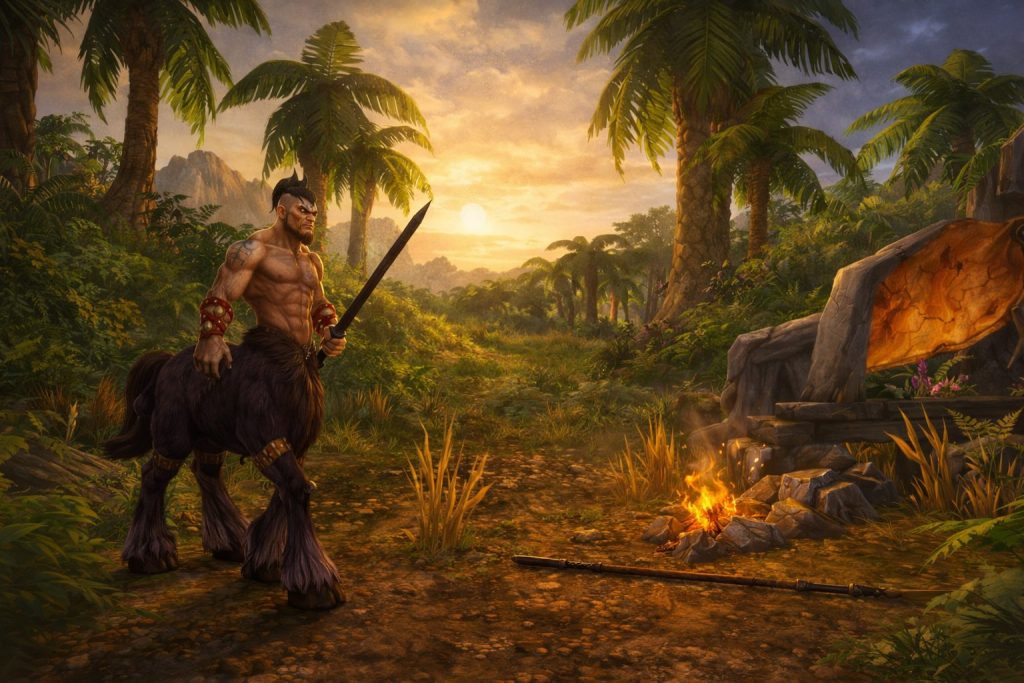
Leveling is the game
Leveling is the game
Retail players often enter Classic with the wrong mental model.
Modern WoW tends to push you toward the level cap as efficiently as possible because the main structure of the game is built around max-level systems. Classic is not like that. In Classic, leveling is not the tutorial before the real game. Leveling is a major part of the game itself.
That does not mean you cannot optimize it. You absolutely can. But if you arrive expecting a brisk sprint to the “important part,” Classic is going to feel stubborn, oversized, and unnecessarily slow on purpose. The world is bigger. The friction is intentional. The travel time is real. The journey is not trying to get out of your way.
This is one of the best things to remember before you start. If you understand that leveling is part of the value, not just part of the delay, Classic stops feeling broken and starts feeling like itself.
Save your money: mounts are expensive
Mounts are not cosmetic in Classic. They are economic checkpoints.
A lot of new players spend too freely early on because they treat leveling purchases the way they would on live servers. That is usually a mistake. Gold in Classic matters more. Bad spending hurts more. And your first mount is one of the first places where the game asks whether you were paying attention.
Older Classic writing often framed the level 40 mount as one of the most painful financial hurdles, and that remains a useful mindset even if the broader server economy changes over time. The point is not just the exact number. The point is that movement speed is worth planning around and random spending is not.
If you want smoother progress, be selective. Do not buy every temporary gear upgrade. Do not treat the Auction House like a convenience store. Do not burn gold just because a small upgrade looks tempting in the moment. A lot of players discover too late that “being the level 45 guy without a mount” is not just embarrassing. It is slow.
Keys open doors
Classic loves access requirements.
Modern dungeon design often assumes you should get into the content quickly and cleanly. Classic is much fonder of making you earn your way in. Attunements, keys, and progression chains are not little bits of forgotten RPG theater. They are part of the game’s social and progression logic.
That is why the old advice still works: learn what unlocks what. Know which dungeons, raids, and chains require extra steps. If you are the player with the key, the attunement, or the right progression done ahead of time, you are more useful to your group than the player who just arrived hoping somebody else handled it.
This is still reflected in official Classic-era progression language. Blizzard’s Anniversary Edition updates continued to frame raid availability and attunement progress as part of the content flow, including Blackwing Lair access during the rolling phase structure.
Classic does not mind if the door stays closed until somebody earns the right to open it. In fact, it kind of likes that.
Your reputation precedes you
This might be the most timeless point in the entire article.
Classic is more social by friction than by sentiment. You need people more often, grouping is more manual, and bad behavior is harder to hide behind automated systems. That means your reputation matters more.
If you are lazy, greedy, unreliable, rude, or obviously clueless in a way that wastes other people’s time, players remember. Maybe not everyone. But enough. And in a game where being invited back matters, that is a real cost.
The opposite is true too. Being competent, prepared, fair, and easy to group with quietly builds value around your character. Classic does not always reward you instantly, but it remembers the shape of your behavior better than modern WoW usually does.
Keep your nose clean. That advice aged perfectly.
What this article adds in 2026
Most of the original wisdom still stands. The modern additions are mostly about context, not replacement.
If you are on Classic Era, the old beginner logic still works almost untouched. If you are on Anniversary-style fresh realms, the crowding, economy, and early progression pressure matter more. If you are on Hardcore, caution, sustain, and dungeon planning matter more because Blizzard’s rules are stricter there. And if you are on Burning Crusade Classic-style progression, remember that not every old vanilla warning carries over unchanged, especially dishonorable kills.
In other words, the bones of the old article are still strong. You just need to know which version of Classic you are actually playing.
Quick summary table
| Tip | Why it still matters |
|---|---|
| Research your class first | Classic class identity is much less flexible than live WoW |
| Respect old honor rules | Vanilla-style dishonorable kills can still punish careless PvP behavior |
| Keep First Aid useful | Recovery time is real, especially outside instances |
| Bring food and water | Poor preparation quietly slows everything down |
| Treat leveling as the game | Classic is built around the journey, not just the cap |
| Save gold early | Mount timing and economic discipline shape your pace |
| Learn attunements and keys | Access itself is part of progression in Classic |
| Protect your reputation | Manual grouping makes bad behavior more expensive |
FAQ
Final
Classic is at its best when you understand what kind of game it is before it starts punishing you for pretending otherwise. Many of the frustrations players experience in Classic come from expecting the faster systems and conveniences of modern WoW. When you approach Classic with the right expectations, the slow pace, the long journeys, and even the grind become part of the experience rather than something that constantly gets in your way.
At the same time, not every player wants to spend dozens of hours stuck in the slowest parts of progression. If your goal is to make the journey smoother and prepare your character more efficiently, CoinLooting offers WoW Classic gold for Era, Hardcore, and Anniversary realms. Having enough gold early on makes a big difference. It helps with training abilities, buying consumables, upgrading gear, and preparing for the expensive mount milestones that many players underestimate.
For players who simply want to reach the real endgame faster, WoW Classic Level Boost is another option. Instead of spending weeks repeating the same leveling routes, you can move directly toward dungeons, professions, PvP, and the parts of Classic that you actually want to play.
Classic rewards preparation, patience, and good decisions. The better you understand how the game works before level 60, the smoother the entire journey becomes.